
Understanding Common Law Marriage in Texas
Texas recognizes informal (common law) marriage, but it’s not automatic. To establish one under Texas Family Code §2.401, a couple must:
- Agree to be married,
- Live together in Texas as spouses, and
- Represent to others that they are married.
Without all three elements, the relationship is not legally recognized as a marriage — no matter how long the couple has lived together.
Misunderstanding these requirements can lead to major disputes over property, support, or inheritance rights after a breakup or death.
Example: A couple lives together for seven years, shares bills, and buys furniture together — but never holds themselves out as married. When they separate, one partner claims common law marriage. Without proof of mutual intent, courts may reject the claim, leaving property rights unclear.
How a Cohabitation Agreement Protects You
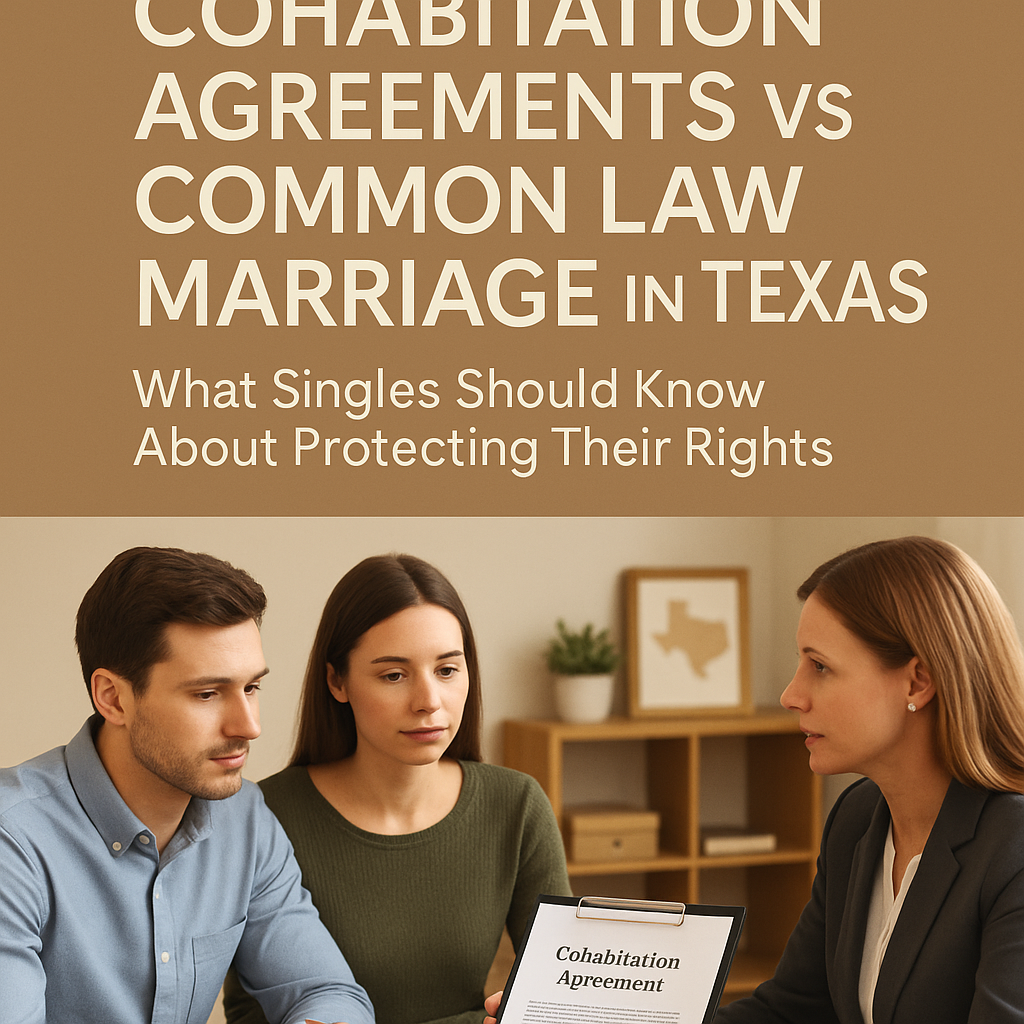
A cohabitation agreement is a written contract between unmarried partners that outlines financial rights and responsibilities. It can specify:
- Who owns certain property or debts
- How expenses will be shared
- What happens to jointly purchased assets if the relationship ends
- Whether either partner will provide support
Unlike common law marriage, a cohabitation agreement does not create marital rights — it simply provides legal clarity and protection.
These agreements are particularly valuable for professionals, homeowners, or anyone bringing significant assets into a relationship. A well-drafted agreement can prevent costly disputes and protect each partner’s interests.
Which Option Fits Your Situation?
If you and your partner want the legal benefits of marriage, establishing a formal marriage license is the best path. But if you wish to remain unmarried while protecting your property and financial expectations, a cohabitation agreement can offer security without legal ambiguity.
The attorneys at Webb Family Law advise clients throughout North Texas on cohabitation agreements, property division, and marital planning to ensure peace of mind and clear expectations.
📞 Contact Webb Family Law today to discuss your situation and learn how a tailored agreement can protect your future.
0 Comments